Muse only ever looks at references you added yourself. An image Muse made, even one you loved, is never fed back in.
A read on your taste, with the subjects taken out.
Before any single image, Muse derives a world brief from your whole set of references. It describes only how you see: the light you reach for, how you frame, what pulls your eye. It deliberately never says what to depict, so it can guide any subject without turning your board into one repeated picture. It is rewritten whenever your references change.
- Logline
- A quiet contemplative who keeps finding the single warm ember inside cold or empty spaces: the lone human or the lone glow that gives scale and tenderness to something vast and still.
- Look
- 35mm film blended with clean digital, always warm-versus-cool: muted, slightly desaturated grades, crushed shadows, warm amber highlights, fine grain, gentle halation. Palettes lean tonal, one saturated accent (red, amber, pink, orange) burning against greys, greens and near-blacks.
- Framing
- Two poles: sweeping wide vantages that dwarf a small subject, or intimate tight crops on a single detail. Loves a lone element at the far focal point, figures seen from behind, and shooting through a frame within the frame (windows, mirrors, doorways) with deep shadow eating the edges.
- Drawn to
- The single point of warmth within emptiness and scale; solitude and quiet human smallness; liminal hushed stillness; the tender coexistence of the organic with the cold and monumental.
- Era
- Contemporary art-photography steeped in analog nostalgia: cinematic, melancholic, faintly wistful. Brutalist austerity to mid-century warmth to modern minimalism, always filtered through a dreamlike calm.
- Not this
- high-key cheerfulness, no shadow
- chaotic crowds as chaos
- garish flash snapshot color
- sports kineticism
- clutter with no focal point
One reference, chosen to carry the subject.
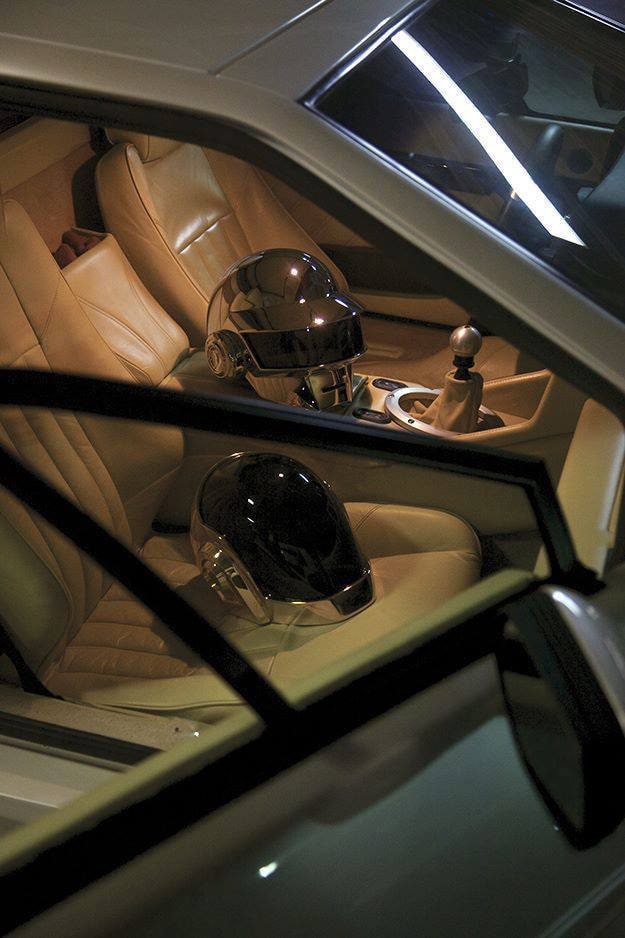
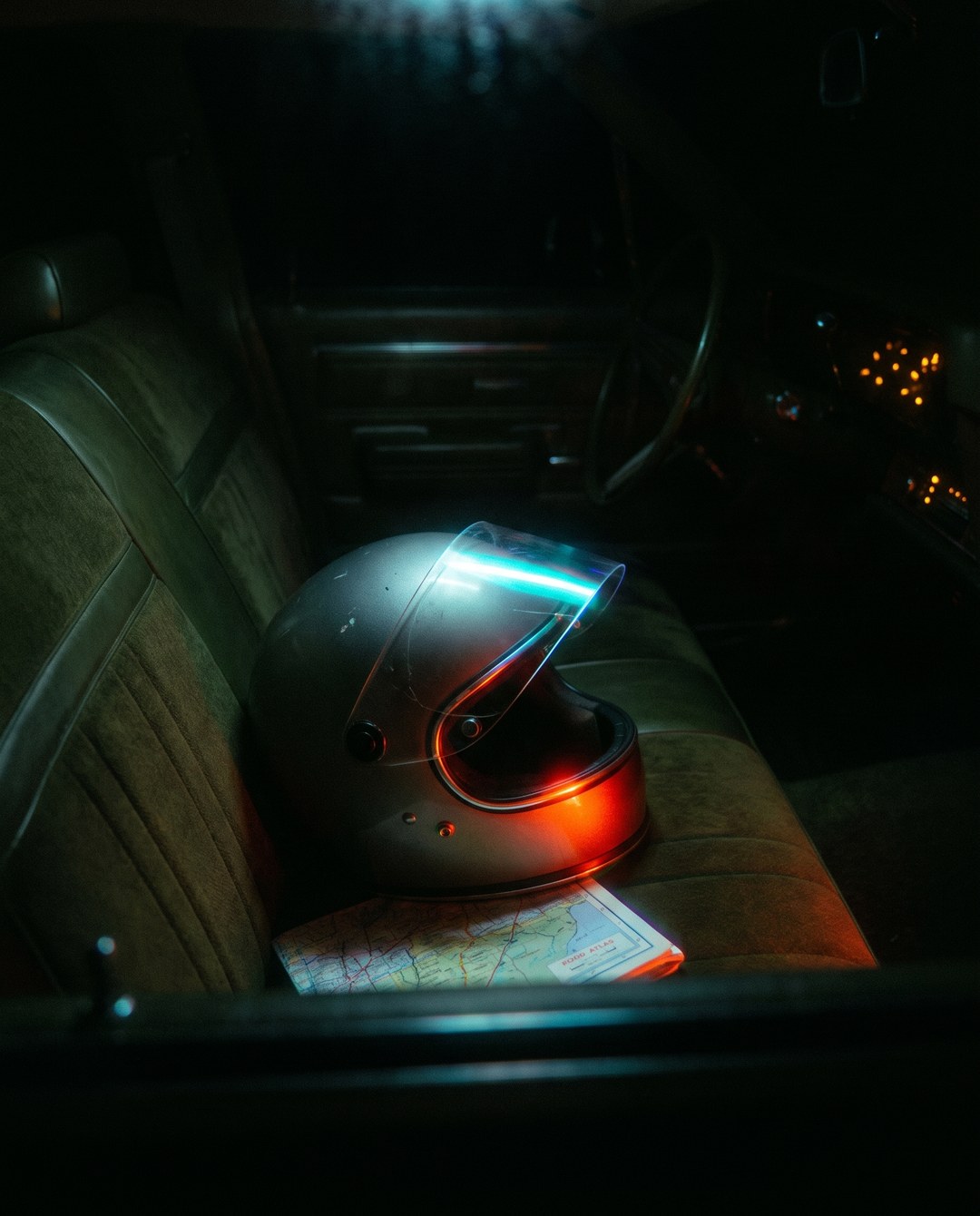
Muse draws a single real reference as the anchor. In v4 the draw is weighted new-over-repeat: images it has leaned on least surface first, so it works through your whole collection instead of circling a few favourites. The anchor's cached note becomes the subject seed. This drop drew a shot of two Daft-Punk-style helmets in a car, seen through the window.
- Subject
- A chrome silver helmet and a glossy black helmet, evoking Daft Punk, seated inside a cream-leather automobile interior, glimpsed through a car door window.
- Light
- Low-key nighttime, a single bright vertical glare down the rear glass, warm reflections pooling on the chrome dome and seat creases.
- Composition
- Vertical frame shot through a window divided by a black B-pillar; chrome helmet upper-center on the rear seat, black helmet on the front, side mirror jutting in at lower right.
- Medium
- 35mm film, soft grain, shallow depth of field, slightly desaturated warm tones.
- Palette
- #C9A87C#E5D2A8#1A1208#9FA3A6#6B5530
A second reference lends its light.
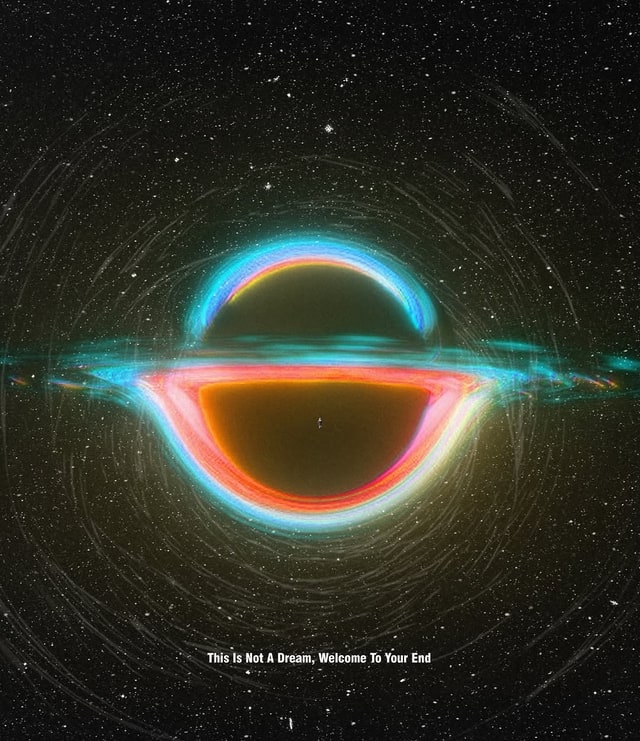
This is what engine v4 added. The leading style reference hands over its exact palette and light as a per-drop grade, so the render commits to one deliberate lighting world instead of averaging across references. Here that reference was a poster of a black hole. Watch where its light ends up.
- Light
- Self-emitted glow from the accretion disk: electric cyan rimming the top arc, fiery orange-red blooming along the lower crescent, radiating into faint warm haze, with no external light source; the surrounding void near-black with pinprick starlight.
- Medium
- High-resolution render with film-grain noise, subtle chromatic aberration and gaussian bloom, poster-grade finish.
- Mood
- Ominous, sublime, dread-tinged awe: beautiful but threatening.
- Palette
- #000000#2fd3e0#ff5a3c#ff9a2e#c8462b#f5f0e8
Up to three references, shown as style only.
The same handful of real references goes to the renderer as visual style anchors, never as subjects to copy. This drop sent three: the black hole leads (it is also the style anchor above), alongside a dusk valley and an after-hours portrait.
self-lit cyan and orange on black
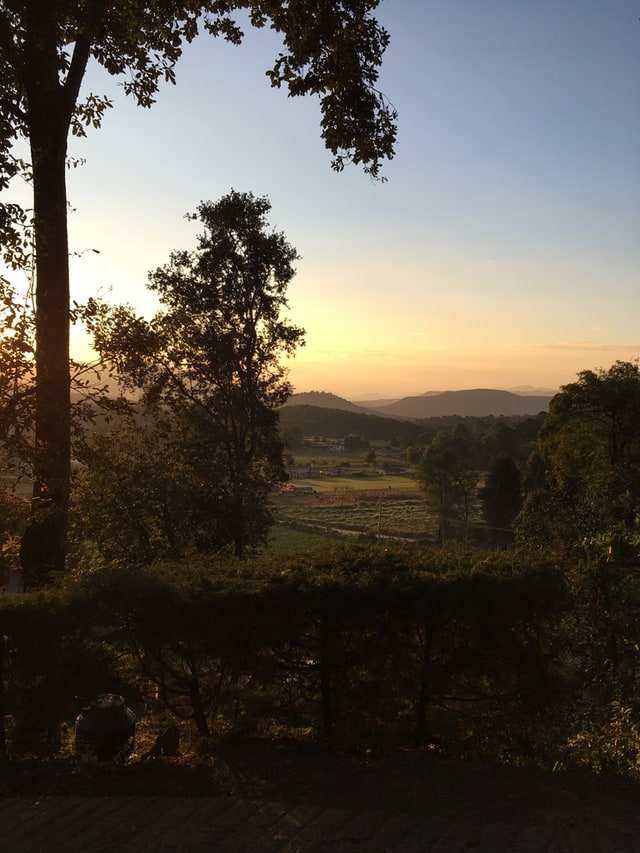
backlit dusk, crushed shadow
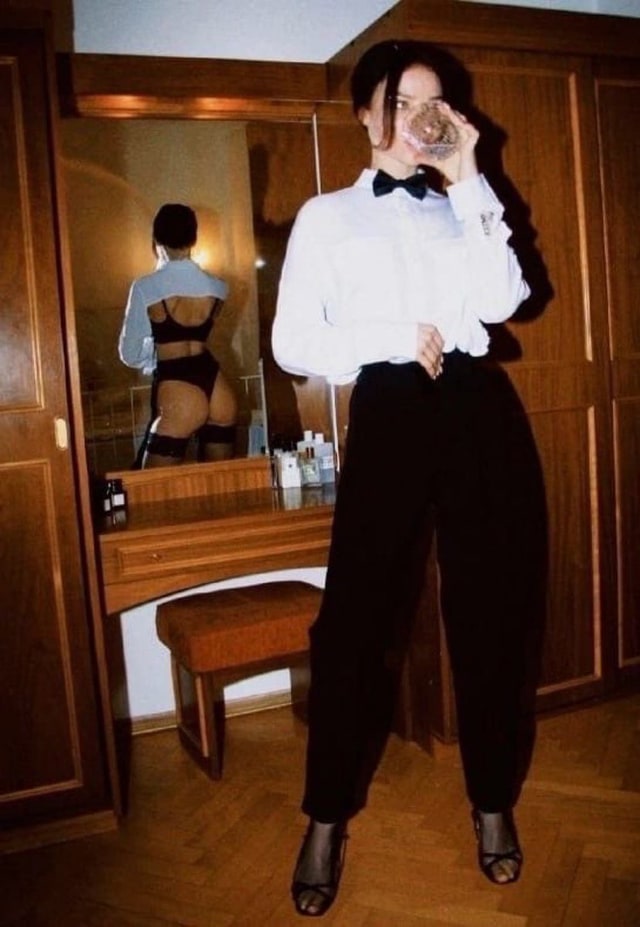
warm tungsten, 35mm grain
Claude writes the scene.
claude-sonnet-4-6 fuses three things into one prompt, and picks the aspect ratio: the eye (the brief), the anchor's subject, and the style anchor's grade. Below is the exact prompt it wrote. Its DNA is color-coded, so you can see the seams: subject and framing from the anchor, light and finish from the style anchor.
Gemini paints it once.
gemini-3-pro-image renders the prompt with the three references attached. The model is autoregressive, not diffusion: there is no seed to replay, so this exact frame can never be reproduced. Muse still records a seed for the trail, it is simply never sent.
You decide, and Muse learns.
You kept this one at 00:15, three and a half minutes after it landed. Keeps and passes are logged against the exact recipe, so Muse can learn over time which briefs, anchors and grades earn keepers. But a kept image still never becomes an input. The loop teaches the style brain; it never feeds itself.